
A New Kind of Intelligence Is Emerging
Imagine a digital analyst who doesn’t just wait for your instructions—but proactively monitors global markets, analyzes trends, makes decisions, and learns from outcomes. It doesn’t sleep. It doesn’t wait. It acts.
This is not the future. This is Agentic AI—the next leap in artificial intelligence.
But to understand where we’re going, we must first understand how we got here.
The Evolution of AI: From Rules to Reasoning
The journey of AI has been one of increasing sophistication and autonomy:
– Rule-Based Systems (1950s–1980s): Early AI followed strict logic. It could play chess or solve equations—but only within rigid boundaries.
– Machine Learning (1980s–2010s): AI began learning from data, enabling predictive models in finance, healthcare, and marketing.
– Deep Learning (2010s–2020s): Neural networks unlocked breakthroughs in image recognition, speech, and natural language.
– Generative AI (2020s): Models like GPT-4 and DALL·E could now generate human-like text, images, and code.
– Agentic AI (Emerging): AI that doesn’t just respond—it perceives, decides, acts, and learns.
📈 Infographic: Evolution of AI
 Generative AI: The Creative Catalyst
 Generative AI: The Creative Catalyst
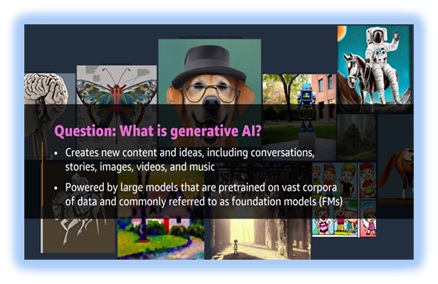
Generative AI has transformed industries. Powered by Foundation Models and Large Language Models (LLMs), it can write emails, generate reports, draft legal documents, and even design products.
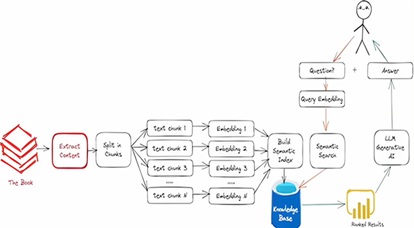
But its real power lies in contextual intelligence—especially when paired with RAG (Retrieval-Augmented Generation) architecture.
 🔄 Infographic: RAG Architecture
How LLMs retrieve relevant data and generate grounded responses.
 Agentic AI: Intelligence That Acts
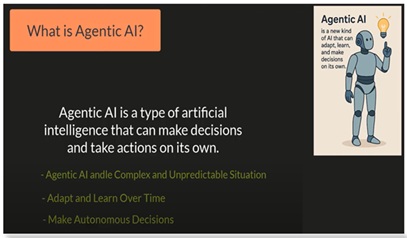
 Agentic AI: Intelligence That Acts
While Generative AI is impressive, it still waits for a prompt. Agentic AI goes further. It’s proactive. It’s autonomous. It’s goal-driven.
An Agentic AI system can:
– Perceive its environment
– Decide what to do
– Act on those decisions
– Learn from the results
💡 Example:
A supply chain agent monitors weather, inventory, and traffic. It reroutes shipments, updates customers, and negotiates with vendors—without human input.
This is not just automation. This is autonomous intelligence.
 The Agent Loop: How It Works
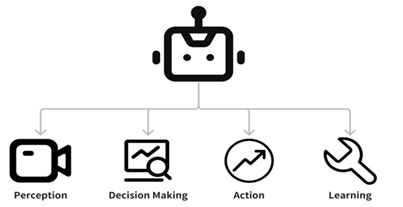
At the heart of Agentic AI is a continuous feedback cycle known as the Agent Loop:
🔁 Infographic: The Agent Loop
Perception → Decision-Making → Action → Learning
1. Perception: Gathers data from APIs, sensors, or documents.
2. Decision-Making: Evaluates options based on goals and context.
3. Action: Executes tasks—sending emails, placing orders, updating systems.
4. Learning: Adapts based on feedback and outcomes.
This loop allows agents to evolve over time, becoming smarter and more effective.
Traditional AI vs. Agentic AI: A Strategic Comparison
| Feature | Traditional AI | Generative AI | Agentic AI |
| Autonomy | Low | Medium | High |
| Learning | Static | Iterative | Continuous |
| Decision Making | Programmed | Prompted | Autonomous |
| Scalability | Limited | Good | Excellent |
| Integration | Point Solution | API-Based | Full System |
Agentic AI doesn’t just optimize processes—it redefines them.
 Types of Intelligent Agents: The Building Blocks
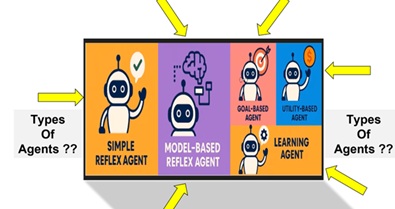
Understanding the types of agents helps in designing the right solutions:
– Simple Reflex Agents: React to current inputs (e.g., thermostats).
– Model-Based Reflex Agents: Use internal state for better decisions.
– Goal-Based Agents: Choose actions that achieve specific objectives.
– Utility-Based Agents: Optimize for the best possible outcome.
– Learning Agents: Continuously improve through feedback and experience.
These categories form the foundation of Agentic AI design.
 Real-World Applications: Where Agentic AI Is Already Working
Agentic AI is already transforming industries:
– Autonomous Vehicles: Navigate traffic, avoid collisions, and optimize routes.
– Healthcare: Virtual agents assist in diagnostics, monitor patients, and suggest treatments.
– Finance: AI traders analyze markets, execute trades, and manage portfolios.
– Smart Homes: Agents manage lighting, security, and energy consumption.
– Customer Service: AI agents resolve queries, escalate issues, and learn from interactions.
– Agriculture: Drones and bots monitor crops, apply fertilizers, and predict yields.
These are not pilots—they’re production systems delivering ROI.
Generative + Agentic: Better Together
Think of Generative AI as the brain and Agentic AI as the body.
Generative AI provides creativity, language fluency, and reasoning. Agentic AI adds autonomy, decision-making, and execution.
Together, they enable end-to-end intelligent systems—from understanding a problem to solving it autonomously.
Frameworks Powering the Agentic Revolution
Several frameworks are enabling developers to build Agentic AI systems:
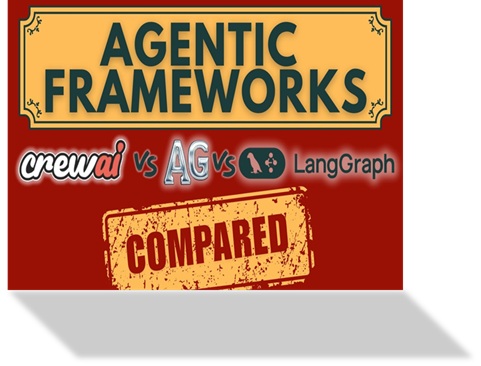
– CrewAI: Enables multi-agent collaboration with defined roles and memory sharing.
– AutoGen (Microsoft): Facilitates LLM-based agents that collaborate and solve complex tasks.
– LangGraph: A graph-based orchestration framework for building agent workflows.
These frameworks abstract the complexity of agent design, making it easier to deploy intelligent systems at scale.
 Deep Dive: CrewAI in Action
Among these, CrewAI stands out for its modularity and enterprise readiness. It allows developers to:
– Define agents with specific roles (e.g., researcher, planner, executor)
– Enable collaboration between agents (crews)
– Share memory and context across tasks
– Execute workflows in parallel or sequence
This makes CrewAI ideal for complex, multi-step business processes—such as market research, compliance audits, or product development.
Use Case: Stock Analyst Agent
Let’s bring it all together with a real-world example.
The Stock Analyst Agent, built using CrewAI, operates as follows:
– Perception: Monitors financial news, stock prices, and economic indicators.
– Decision-Making: Analyzes trends, evaluates risk, and identifies investment opportunities.
– Action: Recommends or executes trades based on predefined strategies.
– Learning: Refines its models based on market feedback and performance metrics.
This agent doesn’t just assist a human analyst—it becomes one. And it operates 24/7, without fatigue, bias, or delay.
Executive Insights: Why This Matters Now
For C-suite leaders, Agentic AI is not just a technological trend—it’s a strategic imperative.
✅ Scalability: Agents can operate across geographies and time zones
✅ Resilience: They adapt to change in real time
✅ Efficiency: They reduce costs and free up human talent
✅ Innovation: They unlock new business models and revenue streams
Mini Case Studies: Industry Snapshots
– Healthcare: A hospital uses agents to manage patient flow, reducing ER wait times by 30%.
– Finance: A hedge fund deploys AI traders, increasing returns while reducing risk.
– Agriculture: A cooperative uses drones and bots to boost yield and cut pesticide use.
Implementation Strategy: How to Get Started
- Start Small: Pilot with a focused use case.
2. Build Cross-Functional Teams: Blend tech, ops, and domain experts.
3. Choose the Right Framework: CrewAI, AutoGen, LangGraph.
4. Invest in Training: Upskill your teams to manage and evolve AI systems.
5. Govern Wisely: Establish ethical and operational guardrails.
Vision for the Future: Autonomous Enterprises
We’re just scratching the surface.
In the next 3–5 years, expect to see:
– AI marketplaces where agents buy, sell, and negotiate.
– Human and Agent collaboration as the new normal.
Conclusion: The Future Is Agentic
The age of passive AI is ending. The age of Agentic AI has begun.
For CIOs, CTOs, and business leaders, the question is no longer if—but how fast you can adapt.
Because in the near future, your most valuable team member might not be human—it might be an agent.
Author: Rahul Rai, Head Service Management Platform (Syngenta)